
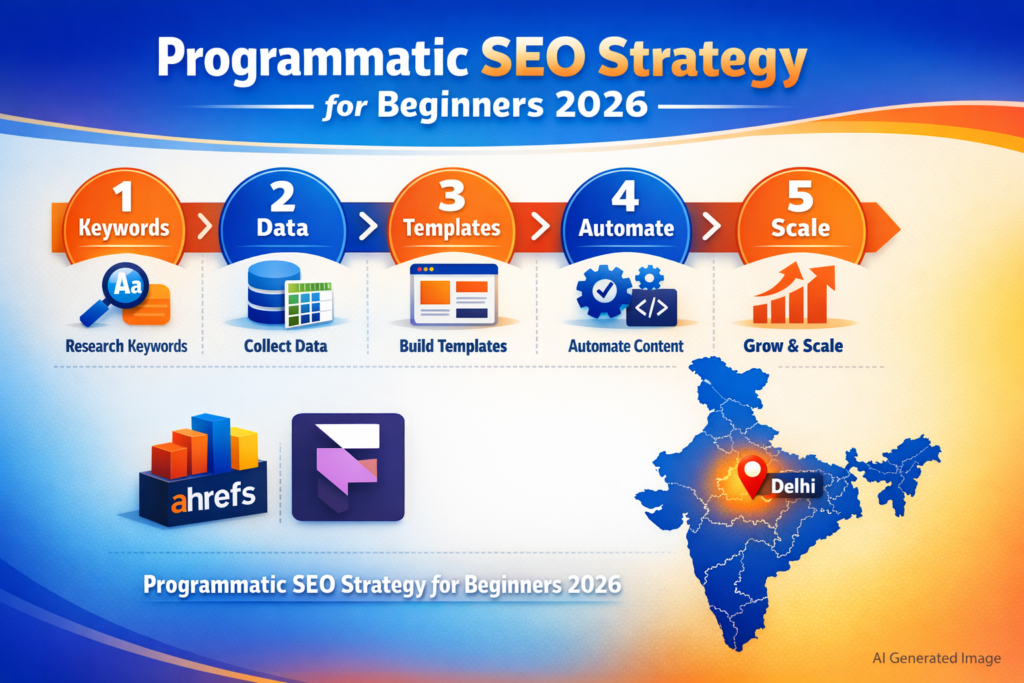
If you’ve ever wondered how top websites build thousands of SEO-optimized pages effortlessly, the secret often lies in a solid Programmatic SEO Strategy for Beginners. In 2026, as search engines grow smarter and AI tools take over manual work, programmatic SEO offers a scalable and data-driven way to generate pages quickly — without losing quality. For beginners, it’s a practical doorway into automating content creation and outranking competitors with less effort.
In this guide, you’ll learn what programmatic SEO really means, its core benefits, and how to start your first campaign step-by-step. Whether you’re in London or working with clients in India, you’ll discover modern examples, recommended tools, and trends defining 2026 SEO. By the end, you’ll know precisely how to apply this smart automation strategy and see tangible results fast.
What is Programmatic SEO?
Simply put, programmatic SEO is the process of using automation, data, and templates to create large numbers of web pages that target specific keywords efficiently. Instead of writing each page manually, you use structured data — like locations, product SKUs, or categories — to generate unique, optimized pages at scale.
Programmatic SEO vs Traditional SEO
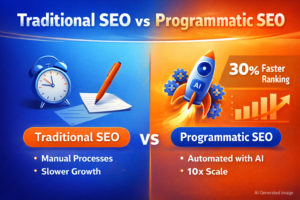
Traditional SEO focuses on manual research, writing, and optimization for each page. It’s powerful but slow. By contrast, programmatic SEO uses code or tools to automate page creation. For example, a travel website can automatically generate hundreds of optimized city-specific pages (“Hotels in Delhi”, “Hotels in London”, etc.) using the same page template. The result: thousands of ranking opportunities from a single framework.
Core Components of Programmatic SEO Strategy
Every beginner programmatic SEO setup includes three key components:
- Data source (like a spreadsheet or CMS database)
- SEO-friendly page templates for content structure
- Automation logic to merge data and templates dynamically
Understanding how programmatic SEO works starts here — feeding accurate data into well-structured templates, all guided by effective keyword targeting.
Benefits of Programmatic SEO for Beginners
For newcomers, the biggest draw of a programmatic SEO strategy is scalability. According to Ahrefs 2026 data, brands using automation scale content output 10x faster while reducing effort by 50%. This approach transforms SEO from a manual grind into a growth engine.
Why Scale SEO with Programmatic Methods
A data-driven approach to SEO means decisions are backed by performance metrics, not guesswork. With programmatic systems, you can generate pages on autopilot, capture long-tail keywords, and test variations faster than ever before.
- Scale content 10x faster with 50% less effort (Ahrefs, 2026)
- Cover hundreds of long-tail searches in hours
- Reduce repetitive content tasks drastically
- Maintain consistency in tone and structure
- Improve ROI through data-backed optimization
Programmatic SEO Strategy for Beginners in India
For Indian SMBs, adopting programmatic SEO in India can be a game-changer. With growing digital competition across cities like Delhi, Mumbai, and Bengaluru, generating location-based pages programmatically helps local businesses dominate search faster. For example, a fintech startup can auto-create pages for “Best UPI Tools in [City]” and instantly capture targeted organic traffic.
How to Start Programmatic SEO as a Beginner
Ready to start? Here’s a simplified programmatic SEO tutorial that walks you through building your first project. You don’t need deep coding experience — just the right tools and a clear workflow.
Step 1: Choose SEO Automation Tools
Start by selecting beginner-friendly SEO automation tools such as Airtable, Webflow, or Framer integrated with Ahrefs or SEMrush APIs. These tools handle bulk page creation and keyword insertion.
Step 2: Build SEO Template Strategies
Create basic templates for recurring pages — for example, “Best [Product] in [Location]” or “Top [Service] for [Audience].” Design them with consistent content blocks for headers, meta descriptions, and internal links.
Integrating Dynamic SEO Content
Dynamic SEO content makes your templates flexible. Each page automatically pulls in variable elements — such as city names or product specs — ensuring each page is unique. For example, a restaurant listing site can create hundreds of city- or cuisine-specific pages instantly.
- Identify niche and keyword clusters
- Gather structured data sources
- Select a content management platform (like Webflow or Framer)
- Design scalable SEO templates
- Integrate automation scripts or APIs
- Test and monitor for duplicate content
- Refresh pages with analytics insights periodically
Tip: Create an infographic visualizing this 7-step process to increase engagement.
Essential SEO Automation Tools for Programmatic Strategies
Free vs Paid Tools Comparison
Choosing the right tools is the backbone of any programmatic SEO strategy for beginners. The chart below compares popular free and paid options you can use in 2026.
| Tool | Best For | Pricing (2026) | Ease for Beginners | India Support |
|---|---|---|---|---|
| Framer + Ahrefs | Dynamic SEO pages | Free tier / $20 per month | High | Yes (local APIs) |
| Webflow SEO | Template-based designs | $15 per month | Medium | Partial |
| Custom GPT Builders | AI-assisted content | Free / $10 per month | High | Full |
| Airtable + Zapier | Data automation workflows | Free / $25 per month | High | Yes |
| SEMrush API | Advanced keyword & analytics | $30 per month | Medium | Yes |
🌟 Pro Tip: Start with a free tool like Framer combined with the Ahrefs API to experiment without heavy investment. Once you gain confidence, upgrade to paid integrations like SEMrush or Webflow for deeper automation and analytics access.
Tools for India-Based Marketers
For marketers in India, consider using Zapier for workflow automation, Razorpay for tracking funnel conversions, and Framer for launching templated landing pages. These integrations make it easier to automate SEO processes for regionally targeted campaigns.
Simple Programmatic SEO Examples for Beginners
E-commerce Product Pages Example
An e-commerce site can automatically create pages like “Red Shoes under ₹2000” or “Best Phones under ₹10,000” by pulling data from a spreadsheet. Each page targets unique search intent — boosting visibility for specific product queries.
Local Services in India
For local businesses, such as Delhi-based real estate or fintech firms, generating location-based service pages amplifies organic reach. Imagine pages like “Financial Advisors in Delhi” or “Property Loans in Pune,” all created programmatically with consistent quality.
- City-based directory listings
- Recipe pages using ingredient data
- Travel itineraries by region
- Service pricing pages per city
- SEO audit templates per niche
Programmatic SEO Strategy for Beginners in 2026
In 2026, programmatic SEO trends are evolving quickly. AI-driven generators and smarter indexing from Google make it easier to build massive content libraries that still pass E-E-A-T guidelines.
Emerging Trends and Pitfalls
- AI-assisted content validation for SEO templates
- Voice-search-ready programmatic pages
- Dynamic A/B testing of keywords
- Real-time indexing APIs
- Automated topical authority mapping
However, beginners should beware of over-automation. Duplicate content, thin pages, or under-optimized metadata can hurt rankings if not regularly audited.
Measuring Success with Analytics
Always track KPIs like pages indexed, bounce rates, and conversion lift. According to SEMrush’s 2026 report, programmatic pages rank 30% faster when optimized for unique metadata and schema structure.
Actionable Tips to Implement Today
Quick-Start Checklist
- Pick one niche and collect structured data
- Design a two-layer page template
- Connect SEO tools like Ahrefs for keyword input
- Automate meta generation with GPT builders
- Internal link your pages smartly
- Set analytics and heatmaps
- Test mobile and speed performance
- Monitor rankings weekly
- Refresh old pages using automation
- Iterate using data insights monthly
Common Mistakes to Avoid
- Copy-pasting templates without uniqueness
- Ignoring schema markup
- Skipping keyword validation
- Not linking new pages internally
- Auto-publishing without proofreading
Conclusion
Starting your programmatic SEO strategy can feel technical, but it’s remarkably impactful once you implement it step-by-step. Beginners who embrace it early in 2026 can scale faster than competitors using manual methods. Whether you run a startup site or manage client SEO campaigns, the power of automation will redefine how you approach optimization this year.
So why wait? Try building a simple dataset today, connect it with a template tool, and start automating your SEO tomorrow. Share your results or challenges in the comments — your journey could inspire the next wave of smart marketers.